

Matas Buzelis: Rising Above the Rim While Learning to Thrive Below It

Jul 2, 2026 3:32 PM
Matas Buzelis: Rising Above the Rim While Learning to Thrive Below It
How Playing for Lithuania Is Shaping Matas Buzelis’ Next Leap
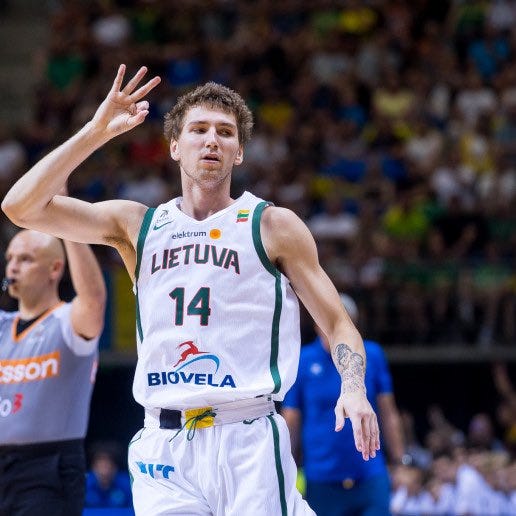 Matas Buzelis will make his debut for Lithuania this summer
Matas Buzelis is best known as an above-the-rim athlete, and his explosiveness at the basket is one of his clearest strengths. At the 2024 NBA Draft Combine, he recorded a 38-inch max vertical and a 31-inch standing vertical—impressive marks for a 6’8” to 6’10” forward. That athleticism shows up in transition, on cuts, and as a help defender.
Offensively, Buzelis is at his best above the rim, where he finishes with big dunks that often turn into highlights. He has already shown a varied dunk package and a fearless approach when attacking the basket. Defensively, his timing and leaping ability make him an effective rim protector, allowing him to block shots with authority and alter attempts around the basket.
Although Buzelis’s first two NBA seasons have been shaped by above-the-rim plays on both ends, several areas still need refinement:
The biggest next step is adding strength and physicality in the paint. Buzelis can still be bumped off his spots and does not always absorb contact well, which can push him toward fancy finishes, fadeaways, or relying on length instead of playing through defenders. More functional strength, especially in his lower body, would help him establish deeper position and finish more consistently inside. Defensively, his timing and length make him a capable shot-blocker, but added strength, better verticality, stronger box-outs, and a higher rebounding motor would make him a more reliable rim deterrent.
That added strength would also support his finishing touch through contact. Buzelis has shown craft around the rim and can finish with either hand, but physical rim protection can still disrupt his touch and efficiency. He doesn’t draw fouls at a high rate and efficiency can dip against stronger/big defenders. As he develops better body control, balance, and softer touch instead of relying mostly on vertical pop, he should become a more dependable scorer below the rim.
His handle is another area that will determine how much of his offense translates in the half court. When he drives into traffic or faces pressure, the ball can get loose, leading to strips and turnovers from help defenders. A tighter dribble and better ball protection would give him more room to create below the rim and make him harder to contain off the bounce.
Those improvements would also help his post-game, which remains a work in progress. At this stage, he is still too light to consistently hold or create deep position, and stronger interior defenders can push him off balance. Developing a sturdier base and more reliable back-to-the-basket counters would make him more effective when operating near the block.
The same physical development matters on the glass. Although Buzelis has improved as a rebounder, he is not yet consistently dominant for his size and position. Added strength and a more forceful approach would help him avoid being boxed out or outmuscled, giving him a better chance to turn his tools into steady production.
The good news is that Buzelis possesses the tools and work ethis to fix all these areas with time and that is where his experience in Lithuania comes in.
Buzelis’s summer with Lithuania gives him a different kind of development opportunity. He is set to making his senior national team debut during the 2027 FIBA World Cup Qualifiers, a meaningful step for a young player with deep Lithuanian roots. Instead of being eased into a limited role, he will be asked to contribute in a setting where every possession carries national-team pressure.
What Lithuania can add to his development:
Leadership and responsibilityPlaying for Lithuania places Buzelis in a high-expectation environment. As one of the program’s young headliners alongside Kasparas Jakucionis, he will be expected to produce while learning from veterans such as Jonas Valančiūnas. That responsibility can speed up the leadership growth he may not always get in the NBA right away.
International basketball IQFIBA play should challenge him in ways the NBA does not. The game often features tighter spacing, more compact defenses, different officiating, and more structured half-court possessions. Those conditions can sharpen his off-ball movement, screening, passing reads, and decision-making when driving lanes close quickly.
Veteran mentorshipWorking closely with Valančiūnas and other experienced Lithuanian players should also help Buzelis absorb the details of physical interior play, professional preparation, and national-team leadership. For a young forward still building strength and polish below the rim, that kind of daily example is valuable.
Pressure, pride, and maturityRepresenting Lithuania also adds an emotional layer. Playing for his family’s roots, in front of passionate supporters and against experienced national teams, can build mental toughness. It gives him a chance to grow not just as a prospect, but as a player trusted to carry meaningful responsibility.
Physical conditioning and skill workThe short, intense summer window should help him stay sharp after the NBA season. Practices and games with the national team give him more live reps against physical defenders while allowing him to keep building the strength, balance, and contact finishing that remain central to his development.
For a 21-year-old still expanding his game, this experience should be more than a summer cameo. It can accelerate the areas that matter most for his NBA future: accountability, versatility, physicality, and confidence in high-pressure environments.
Why the FIBA style matters:
FIBA and international basketball are generally more physical and more condensed than the NBA, which makes the Lithuania experience especially useful for Buzelis.
· More contact: International officiating often allows more bumps, hand pressure, and physicality on drives, screens, and post touches.
· Crowded paint: With no NBA-style defensive three-second rule, bigs can stay closer to the rim, making finishes harder and driving lanes tighter.
· Less space: The slightly smaller FIBA court compresses possessions and forces quicker reads.
· Lithuanian toughness: Lithuania’s basketball identity emphasizes physical screens, disciplined defense, and strong interior play.
That environment directly targets the parts of his game that still need growth. Buzelis will have to play through contact, hold his ground, improve his leverage, and make faster decisions when defenders take away space.
In short, Lithuania gives him exactly the kind of reps that can make his below-the-rim game more reliable—and help those gains carry back to the Bulls.
Comments

Powered by RoundtableBuilt on infrastructure designed for real-time media. Learn more at RTB.io.© Roundtable 2026. By using this site you agree to the Terms of Use and Privacy Policy