

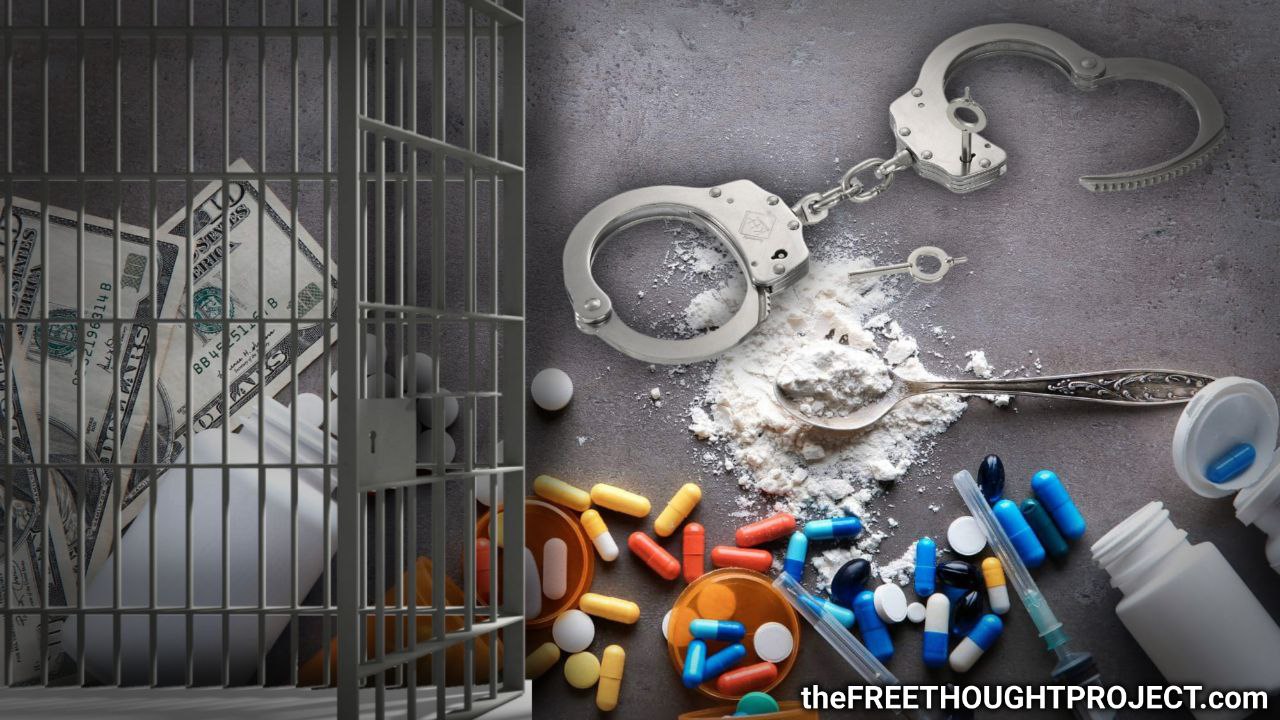


Drug prohibition only continues to make society more dangerous. With cannabis and psychedelics becoming increasingly decriminalized the movement to legalize all drugs has fallen silent, but full legalization is exactly what needs to happen.
(John Vibes) Since September, the United States military has killed at least 83 people in strikes on boats off the coast of Venezuela and in the Eastern Pacific. The Trump administration claims these boats were carrying drugs, but no evidence has been made public to support this claim. Several boats had turned around before being hit, and in at least one case, the alleged suspects were briefly captured before being released, casting more doubt on the claims that they were carrying drugs.
The administration calls the people killed “narcoterrorists” and says the strikes are necessary to protect American lives from the fentanyl epidemic. However, the Coast Guard statistics suggest that about 27% of suspected drug boat searches come up empty, and figures have shown that Fentanyl is not even exported to the US from Venezuela. The whole thing is a lie to justify regime change, and it’s not even a good one.
The strikes have triggered unprecedented pushback from America’s closest allies. The United Kingdom stopped sharing drug interdiction intelligence with the United States because British officials concluded the strikes violate international law and amount to extrajudicial killing. The UN’s human rights chief said the same thing. Colombia’s President Gustavo Petro ordered his security forces to suspend intelligence sharing until the attacks stop. Canada has also made clear it doesn’t want its intelligence used to target boats for deadly strikes.
Even within the US military, the operations provoked serious concerns. Admiral Alvin Holsey, who commanded US Southern Command and oversaw the strikes, raised questions about their legality during a tense October meeting with Defense Secretary Pete Hegseth. He offered to resign and stepped down after just one year in a position that typically lasts three years. When your own admiral quits over legal concerns and your closest ally won’t share intelligence because they think you’re committing war crimes, you’re probably committing war crimes.
It’s very important to highlight that Venezuela plays essentially no role in the fentanyl crisis. The State Department’s own research shows that Mexico is the only significant source of illicit fentanyl reaching the United States. Fentanyl is almost exclusively smuggled over land from Mexico, not by boat through the Caribbean. The boats coming from Venezuela carry cocaine, and most of that cocaine is headed to Europe, not the United States, because European prices are higher and enforcement is weaker. The administration is killing people off the Venezuelan coast to stop a drug that doesn’t come from Venezuela, in boats that are not heading to the US.
This mismatch between rhetoric and reality reveals something important about the drug war. The actual flow of drugs has never really been the point. The war on drugs has always been about control. The real drivers of America’s overdose crisis have nothing to do with Venezuelan fishermen or Colombian smugglers. People use hard drugs because they’re looking for an escape from stressful, painful lives. They’re self-medicating for trauma, for economic desperation, for mental health conditions that go untreated because they can’t afford care or because the stigma makes them afraid to seek it. Attempts to cut off the supply does nothing to address why people want these drugs in the first place. All it does is make the drugs more dangerous.
When you crack down on supply, you don’t reduce demand. You just push the market toward more potent, more dangerous substances that are easier to smuggle. This is exactly how we got fentanyl in the first place. As enforcement made heroin harder to move, traffickers switched to fentanyl because it’s 50 times more potent, meaning you can smuggle the same number of doses in a much smaller package. Every escalation in the drug war has made the drugs deadlier.
We know there’s a better way because we’ve seen it work. In the late 1990s, Portugal faced a catastrophic heroin crisis. The country had the highest rate of drug-related AIDS in the European Union, and overdose deaths were climbing rapidly. Portugal’s response was radical. In 2001, the country decriminalized possession of all drugs and shifted resources from criminal justice to public health.
By 2018, Portugal’s number of heroin addicts had dropped from 100,000 to 25,000. The country achieved the lowest drug-related death rate in Western Europe. HIV infections from injection drug use declined 90%. Over 20 years, Portugal cut drug deaths by 80% and reduced HIV/AIDS and hepatitis cases in half. The number of new HIV cases from dirty needles plummeted from nearly 1,400 in 2000 to about 400 in 2006.
What made Portugal’s approach work wasn’t just decriminalization. It was comprehensive investment in treatment and harm reduction. The country created mobile teams to provide care to people on the street. It expanded syringe exchange programs and made treatment accessible. When police encountered someone with drugs, instead of arresting them, they referred them to a Dissuasion Commission made up of healthcare and social work professionals who could connect them with services. People became less afraid to call for help when they overdosed because they knew they wouldn’t be arrested. They were more likely to be somewhere safe where they could get attention. The stigma around seeking treatment decreased because addiction was treated as a health issue rather than a moral failing.
The cost was astonishingly low compared to what the United States spends on enforcement. Portugal’s program cost less than $10 per citizen per year, while the US spent over $1 trillion on the drug war over the same period with deaths continuing to climb.
Some will point to recent increases in Portugal’s overdose numbers as evidence the model failed. But these increases came after years of underinvestment in the health services that made the policy work in the first place. The lesson isn’t that decriminalization doesn’t work. The lesson is that decriminalization needs to come with adequate mental health services and treatment options if you want to solve the underlying problem. There have been half-hearted attempts at reform in places like Oregon that haven’t turned out well, but that’s because the policy wasn’t holistic. Building the health infrastructure to help people address their core issues and improve their lives is an essential part of the process.
This is a battle many people have given up on. Now that cannabis is legal or decriminalized in most of the country and psychedelics are headed in the same direction, the movement to legalize all drugs has gone quiet. Many people don’t see methamphetamine and heroin as hills worth dying on. They’re the drugs used by people society has written off, so why fight for them?
But prohibition is making these drugs and their trade more dangerous, which makes society more dangerous. We’ve left this issue unguarded for years, and now it’s being used as an excuse to go to war. The administration can claim that fighting drug dealers is sufficient reason to conduct military strikes in international waters, to kill people without trial, to escalate toward potential conflict with Venezuela. Of course, these reasons are dishonest. The boats aren’t carrying fentanyl, they’re not headed to the United States, and prohibition has never worked to reduce drug deaths. If this excuse didn’t exist, the administration would probably find another one. But it’s a serious problem that enough people think fighting drug dealers justifies extrajudicial killings of foreign nationals.
The solution is simple, even if it’s difficult politically. We need to legalize all drugs, including heroin and methamphetamine. Not because these drugs are safe or harmless, but because prohibition makes them deadlier and creates the conditions for violence, corruption, and now military escalation. Only when we treat drug use as a health issue rather than a criminal one will we stop losing friends and family members to overdoses. Only when we redirect resources from incarceration to treatment and harm reduction will we actually help people escape addiction.