


In light of one of the best point guards in NBA history announcing his intention to retire at the end of this season, let's take a look back at the two times Chris Paul was almost a Boston Celtic.
Chris Paul’s announcement that he’ll retire at the end of this season has sent NBA fans down every imaginable memory lane.
Outside of everything he’s done on the court, most NBA fans almost immediately think about the 2011 trade-that-never-was for Paul. And for Laker fans in particular, the memory still stings.
Somewhere in the afterlife, David Stern is chuckling.
But for Celtics fans, Paul’s memory lane includes two what-ifs that could have reshaped the franchise: the 2005 draft-day scenario that nearly shipped Paul Pierce out of Boston for a chance to select Paul, and some 2011 lockout drama of their own when Danny Ainge again tried to pry CP3 loose.
Neither deal materialized, but together they outline just how close Boston came to pairing one of the greatest point guards of his generation with one of the most storied franchises in basketball.
The first near-miss sits in the strange Pre-KG Wilderness Era, when the Celtics were stuck between rebuilding and competing.
In 2005, Boston wasn’t sitting near the top of the draft, but that didn’t stop Ainge from exploring moves that might land him Chris Paul, at either No. 4 where he was selected by the Hornets or somewhere else towards the top of the first round. Nothing materialized, and Boston used the 18th pick to take future Dunk Contest champion Gerald Green.
There was genuine chatter about packaging assets to create an opportunity to acquire CP3, even if it meant rethinking the franchise’s short-term core. Had Boston somehow pulled it off, the timeline that produced the Pierce-Garnett-Allen title run might have looked very different.
Had the Celtics taken the leap, the franchise would have veered into an entirely different timeline. Instead of the Pierce-centered rebuild that culminated with Kevin Garnett’s arrival and the 2008 championship, Boston could have been built around Paul, Al Jefferson, Tony Allen, and a war chest of future picks. In theory, it might have accelerated the rebuild. In practice, it also could have delayed the eventual return to contention, especially in a league still dominated by peak Kobe and the Spurs dynasty.
Boston ultimately passed, Pierce stayed, and the Hornets gleefully grabbed Paul at No. 4. CP3 became a superstar, and the Celtics stayed the course toward Banner 17.
 Oct 28, 2009; San Antonio, TX, USA; New Orleans Hornets guard Chris Paul (3) controls the ball in front of San Antonio Spurs guard Tony Parker (left) during the second half at the AT&T Center. San Antonio beat New Orleans 113-96. (Brendan Maloney/Imagn Images)
Six years later, when Paul’s time in New Orleans hit its expiration point, the Celtics were no longer a franchise searching for direction. They were nearing the end of their championship window, and desperately seeking a way to squeeze one more run out of Pierce, Garnett, and Ray Allen. The 2011 lockout offseason was chaos for the league, and Boston was fully in the mix. Ainge, who has never been shy about star-hunting, aggressively explored a deal for Paul. The pitch was straightforward: join a veteran core with championship DNA and push the Celtics back to the top of the East.
The sticking point?
Paul wasn’t keen on committing to Boston long-term. Free agency loomed, and without assurances he’d re-sign, Ainge wouldn’t ship out Rajon Rondo - seen as an elite young point guard at the time who, fresh off Finals trips in 2008 and 2010, had become the team’s engine. Reports later revealed Paul rebuffed the idea of re-upping, preferring a franchise with younger star talent and a cleaner long-term path. The Celtics made their efforts, but the refusal to commit long-term effectively killed the deal. Soon after, the Clippers swooped in, landing Paul and launching the Lob City era.
We’ll never know how Paul would have looked orchestrating an offense built around Pierce and Garnett’s half-court brilliance. We’ll never know what a baby-faced 2005 version of Paul in green might have grown into under Doc Rivers. What we do know is that twice - at two pivotal points in team history - Ainge recognized how transformative CP3 could be and went after him.
Twice, the universe said no.
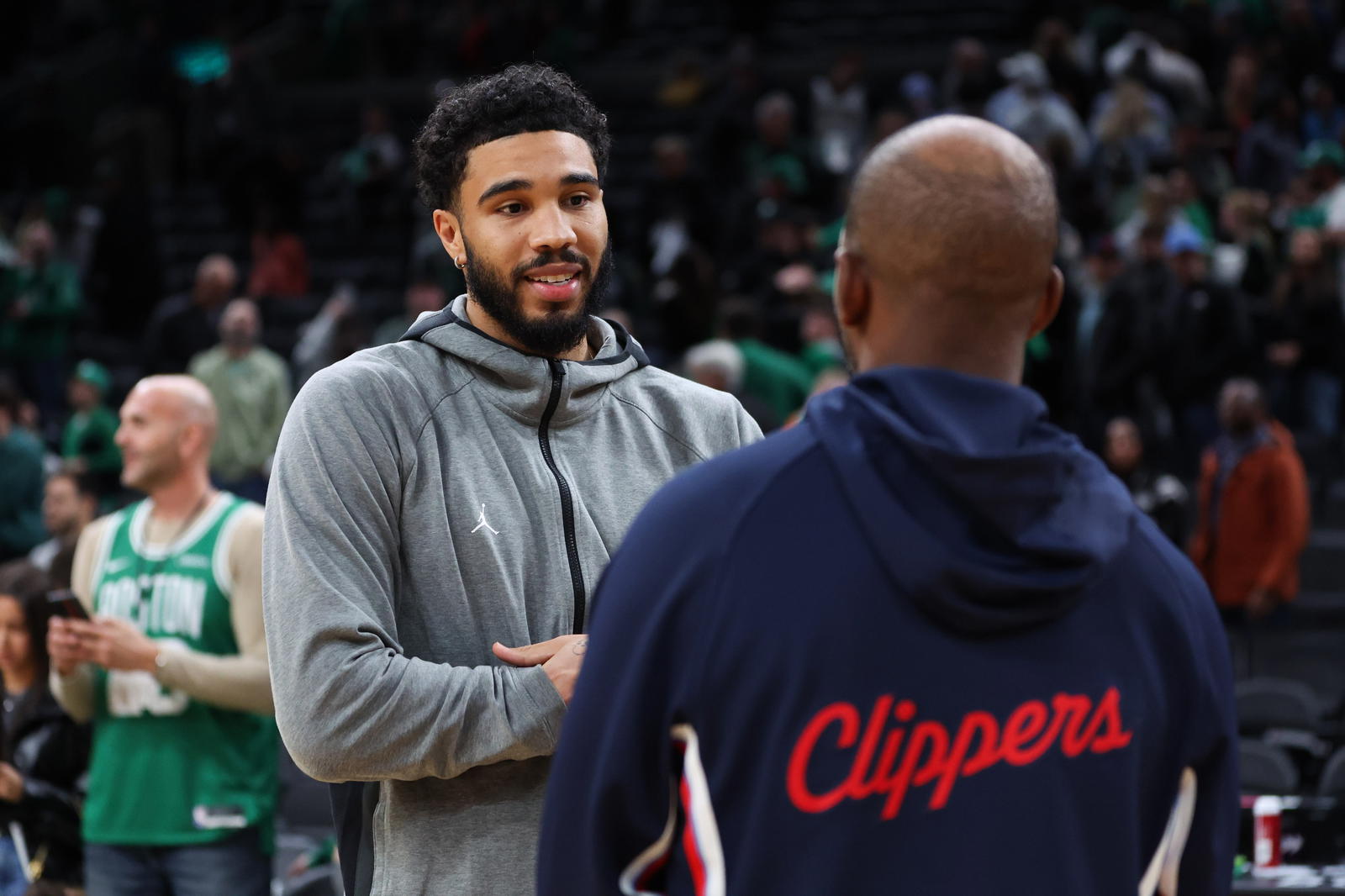 Nov 16, 2025; Boston, Massachusetts, USA; Boston Celtics forward Jayson Tatum (0) speaks with Los Angeles Clippers guard Chris Paul (3) after a game at TD Garden. (Paul Rutherford/Imagn Images)
As Paul prepares to step away, those what-ifs feel sharper than ever. Boston never got to see him run an offense for their team at TD Garden - what his genius might have produced alongside the franchise’s greats. But maybe that’s what makes the what-if so compelling.
In a city built on basketball mythology, Paul remains one of the great untold stories. A Celtic in theory, never in practice, but forever a fascinating piece of the franchise’s alternate history.
Tom Carroll is a contributor for Roundtable, with boots-on-the-ground coverage of all things Boston sports. He's a senior digital content producer for WEEI.com, and a native of Lincoln, RI.