


Nov 14, 2025 9:46 PM
Minnesota Timberwolves guard Mike Conley knows what his team needs to address moving forward.
The Timberwolves have played to a steady 7-4 record so far this season, but that's only a glimpse of what Minnesota is capable of.
The greatest strength of Minnesota has been its overwhelming offense. The team is sixth in the NBA in points per game at an average of 121.2, and putting so many points on the board can afford a team a lot of leeway, even when other mistakes are made.
That being said, the Timberwolves do have chinks in their armor. Something that the team has struggled with has been personal fouls and keeping their opponents off the free-throw line. They've committed the eight-most personal fouls of any team in the NBA while allowing the ninth-most free throw attempts per game to their opponents at 26.8 per game.
 Minnesota Timberwolves center Rudy Gobert (27) and guard Anthony Edwards (5) shake hands after a play against the Utah Jazz during the second half at Delta Center. Rob Gray-Imagn Images
Staying Disciplined
"It's discipline when it comes down to all the calls, no-calls, getting up and down for different games. You've got to stay disciplined and resilient through all those," Mike Conley said (via Timberwolves). "We've got a team [when] we are disciplined, we play the right way, we don't foul, we're a tough team to score on."
Despite an abundance of free throws allowed, the Timberwolves do a good job of limiting opposing offenses. Should they cut down on their fouls and remain disciplined throughout the game, as Conley mentioned, Minnesota would have few exploitable issues in their game.
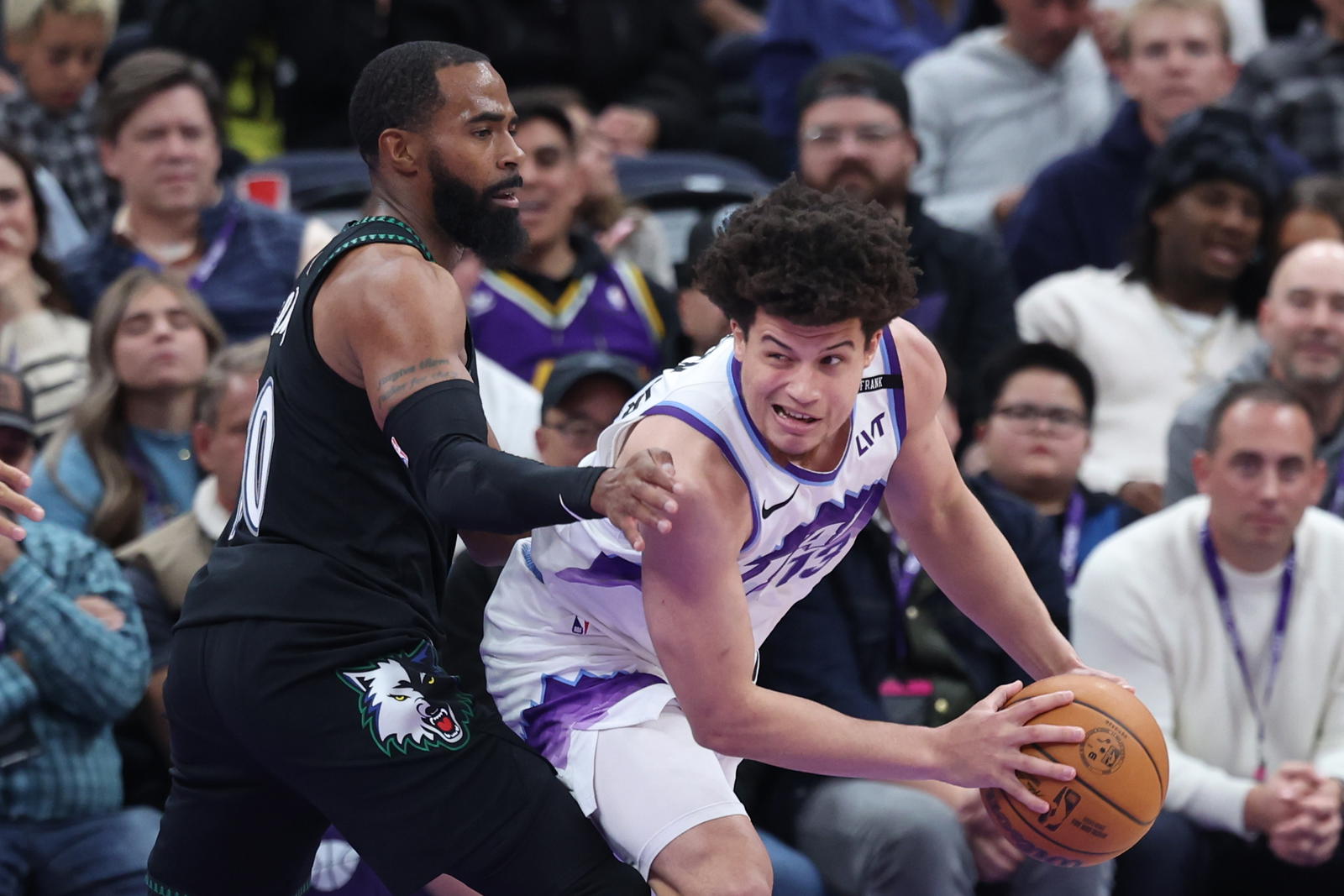 Utah Jazz guard Walter Clayton Jr. (13) looks for the play against Minnesota Timberwolves guard Mike Conley (10) during the second half at Delta Center. Rob Gray-Imagn Images
Though one other problem stands out: physicality. The Timberwolves pride themselves on perimeter shooting and a strong ISO game, but when it comes to crashing the boards, they find themselves outmatched.
Staying Physical with or without Rudy Gobert
They have the seventh-least rebounds per game as a team with an average of just 41.8, and their offensive rebounding is particularly low at just 10 per game. They have the benefit of Rudy Gobert at center to carry a lot of the physical slack for the team, but the rest of the Timberwolves need to get involved to round out the team's overall game.
 Utah Jazz guard Isaiah Collier (8) goes to the basket against Minnesota Timberwolves center Rudy Gobert (27) during the second quarter at Delta Center. Rob Gray-Imagn Images
"Having Rudy on your team is a crutch in in some way, because you used to having him back there and when he's not on the court we have to individually be better," Conley said. "We have to maintain our matchups, maintain drill penetration and not rely on help, but at the same time, if help is need we need to be there early."
The adjustments that Conley is suggesting could round out the Timberwolves as a whole and transform a team that already stands out as an offensive threat into a disciplined two-way machine.
Comments

Powered by RoundtableBuilt on infrastructure designed for real-time media. Learn more at RTB.io.© Roundtable 2026. By using this site you agree to the Terms of Use and Privacy Policy