


© BRYAN TERRY/THE OKLAHOMAN / USA TODAY


Apr 30, 2026 12:20 PM
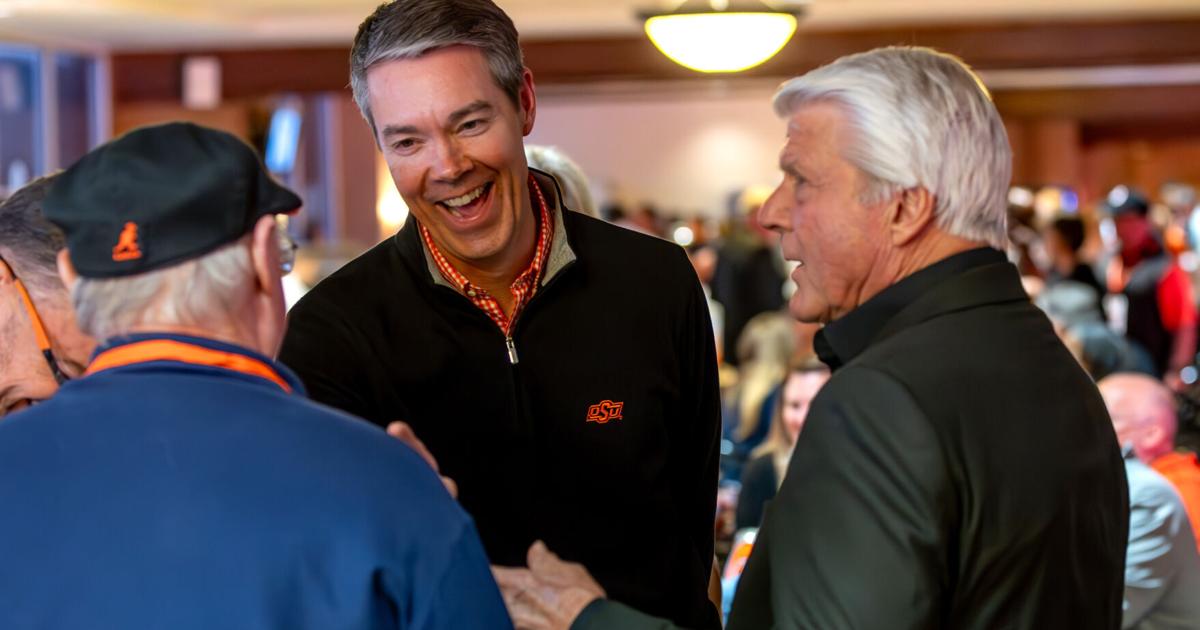
Oklahoma State Athletic Director Chad Weiberg has signed a new four-year contract through 2029. His $750,000 salary stays the same with strict budget and revenue requirements
STILLWATER, Okla. — Oklahoma State University’s athletic director Chad Weiberg has officially signed a new four-year contract that runs through December 31, 2029, keeping his annual base salary at $750,000 with no raise from his previous deal.
The agreement, which was signed on October 30, 2025, and approved by the OSU/A&M Board of Regents, comes after Weiberg spent nearly four months working without a formal contract following the expiration of his initial four-year deal in June 2025.
While the extension provides some stability during a turbulent period in college athletics, it includes strict performance requirements and has drawn pointed commentary from longtime Tulsa World columnist Bill Haisten.
Weiberg, a 1994 Oklahoma State graduate with a bachelor’s degree in business administration and a 2002 MBA from the university, has deep roots in Stillwater.
Born in Pauls Valley and raised across Oklahoma, he began his career in OSU athletics as director of corporate sales and donor relations in the 1990s. After stints with the OSU Alumni Association and Foundation, he gained experience at Kansas State and Texas Tech before returning home in 2017 as deputy athletic director under Mike Holder. He was promoted to vice president and athletic director in July 2021, becoming the first OSU AD to serve on the NCAA Division I men’s basketball committee.
Under Weiberg’s leadership, the athletic department has seen significant revenue growth, surpassing $100 million in his first year and topping $150 million in fiscal year 2025. The department balanced its budget in three of his first four years, though it posted a $5.2 million shortfall in 2025.
His tenure has included high-profile moves, such as the September 2025 firing of longtime football coach Mike Gundy and the subsequent hiring of Eric Morris as head coach, along with successful additions like women’s basketball coach Jacie Hoyt, men’s basketball coach Steve Lutz, and wrestling coach David Taylor.
The new contract places heavy emphasis on fiscal responsibility. Article II, Section 2.04 requires Weiberg to maintain a balanced athletic department budget and increase total revenue each fiscal year.
Failure to meet these standards gives university president Jim Hess the authority to terminate the agreement for cause. In exchange, the deal includes 38 potential performance incentives worth $25,000 or more each, tied to team accomplishments across football, basketball, baseball, and other sports.
Weiberg has already earned several bonuses for achievements like national titles in men’s cross country, Big 12 crowns in wrestling and equestrian, and an NCAA Tournament berth for women’s basketball.
OSU President Jim Hess has praised Weiberg’s steady hand, stating, “Chad is providing strong, steady leadership during one of the most transformative periods in college athletics history.” Yet not all commentary has been glowing.
Tulsa World sports columnist Bill Haisten has been vocal about the uncertainty surrounding Weiberg’s position.
In his April 28, 2026, column titled “It’s impossible to measure Chad Weiberg’s job security,” Haisten highlighted the contract’s demanding financial clauses. On X (formerly Twitter), Haisten wrote: “He did get a new four-year contract, but it seems to have been written on a sheet of thin ice. In spite of having hired good coaches, Weiberg didn’t get a raise.”
Haisten has covered OSU athletics extensively and previously noted administrative instability and “stupid in-fighting” as potential risks to the program’s future. In earlier columns, he explored Weiberg’s revenue strategies and the drama surrounding the 2025 football coaching change, sometimes framing 2025 as a “wild” year for the AD that ended with a popular hire in Morris.
Weiberg has also faced personal challenges. In August 2025, he underwent six-hour open-heart surgery after doctors discovered potentially catastrophic issues during a routine scan. He has since recovered and returned to work.
As college athletics navigates conference realignment, NIL deals, and the transfer portal, Weiberg’s contract reflects Oklahoma State’s push for disciplined financial management. Whether the “thin ice” Haisten described holds or falls through will likely depend on the Cowboys’ ability to sustain revenue growth and competitive success across all sports.
For now, Weiberg remains at the helm of a department but with obvious concerns on if the contract demands are actually sustainable or not.
Read Tulsa World’s Bill Haisten’s column regarding this situation below:
1
Comments

Powered by RoundtableBuilt on infrastructure designed for real-time media. Learn more at RTB.io.© Roundtable 2026. By using this site you agree to the Terms of Use and Privacy Policy