


IMAGN IMAGES via Reuters Connect


Sep 5, 2026 1:44 AM
Detroit’s top prospect is finding his rhythm, swapping grounders for high-velocity line drives as refined timing and improved contact quality signal a major breakthrough for the young outfielder.
Max Clark’s first taste of the major leagues has already given us a little bit of everything. There was the immediate excitement that comes with one of the Tigers’ top prospects finally arriving in Detroit, stretches where Clark has looked completely comfortable against major-league pitching, stretches where pitchers have reminded everyone that he is still only 21 years old, and lately, another run of quality at-bats that has started to show why the Tigers have remained so high on him.
The box-score numbers tell us Clark has been better over the last few weeks, but the Statcast numbers give us a better idea of why. What stands out most is that Clark has not suddenly transformed himself into a completely different hitter.
His bat speed is essentially the same, his attack angle has only moved slightly, and he is not suddenly swinging out of his shoes trying to create home-run power. He is simply beginning to square the baseball up more consistently.
Over Clark’s first 15 major-league games, his average exit velocity sat at 85.7 mph. Since Aug. 17, that number has climbed to 87.9 mph, while his hard-hit rate has jumped from 34.9% to 43.2%. The most noticeable change may be his line-drive rate. Clark produced line drives on only 18.6% of his batted balls during his first 15 games, but since then that number has climbed to 32.4%, while his ground-ball rate has fallen from 37.2% to 29.7%.
I only point this out because Clark’s bat speed has remained almost unchanged, moving from 73.1 mph to 73.7 mph, while his average attack angle has gone from 6.3 degrees to 7.0 degrees. This does not look like a hitter making some massive mechanical adjustment. It looks more like a young hitter beginning to get his timing down against major-league pitching and consistently meeting the baseball in better spots.
The power is not completely here yet
This is also where some perspective is needed. Clark has certainly flashed power, including his home run against Ian Seymour on Aug. 25, when he got a pitch he could drive and sent it out at 99.3 mph. It was another example of the damage Clark can do when he gets the baseball in the air, but one home run does not suddenly make this a power breakout.
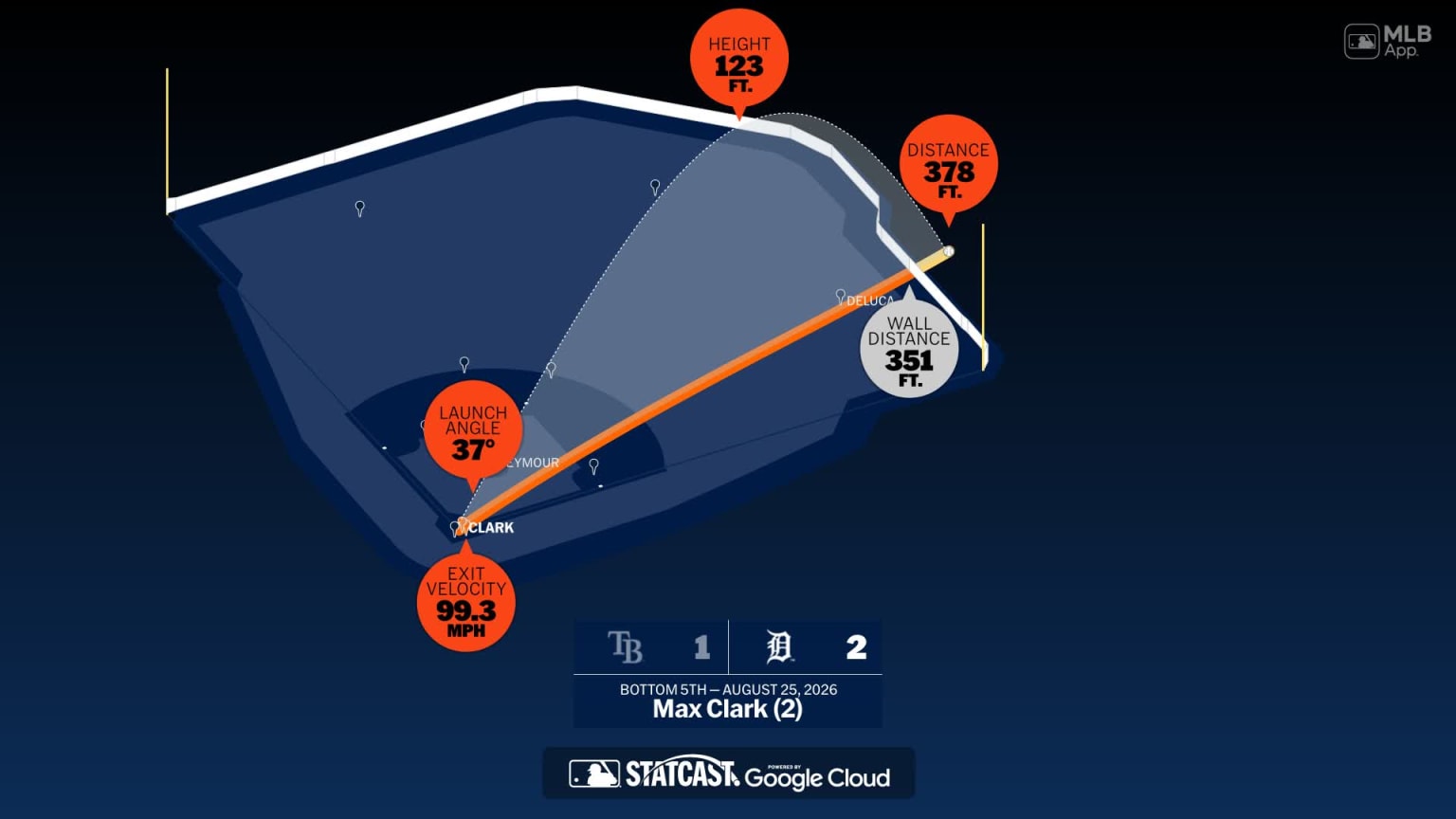
Clark still has only one barrel through his first 82 batted balls, which puts his barrel rate well below the major-league average. His overall average exit velocity has also been below league average, so I would be careful about looking at a few extra-base hits and assuming the power has fully arrived.
What has been more encouraging is the type of contact Clark has been producing around those home runs. The line-drive rate is up, the hard-hit rate is up and he is finding the sweet spot of the bat more frequently. That is why his triple against Tarik Skubal stands out to me as much as the home run did.
Clark hit that ball 105 mph, his hardest-hit ball in the major leagues to that point, even though the launch angle was minus-2 degrees. He did not need to lift the ball to do damage. He squared up one of the best pitchers in baseball, hit it hard and let his speed turn it into an extra-base hit.
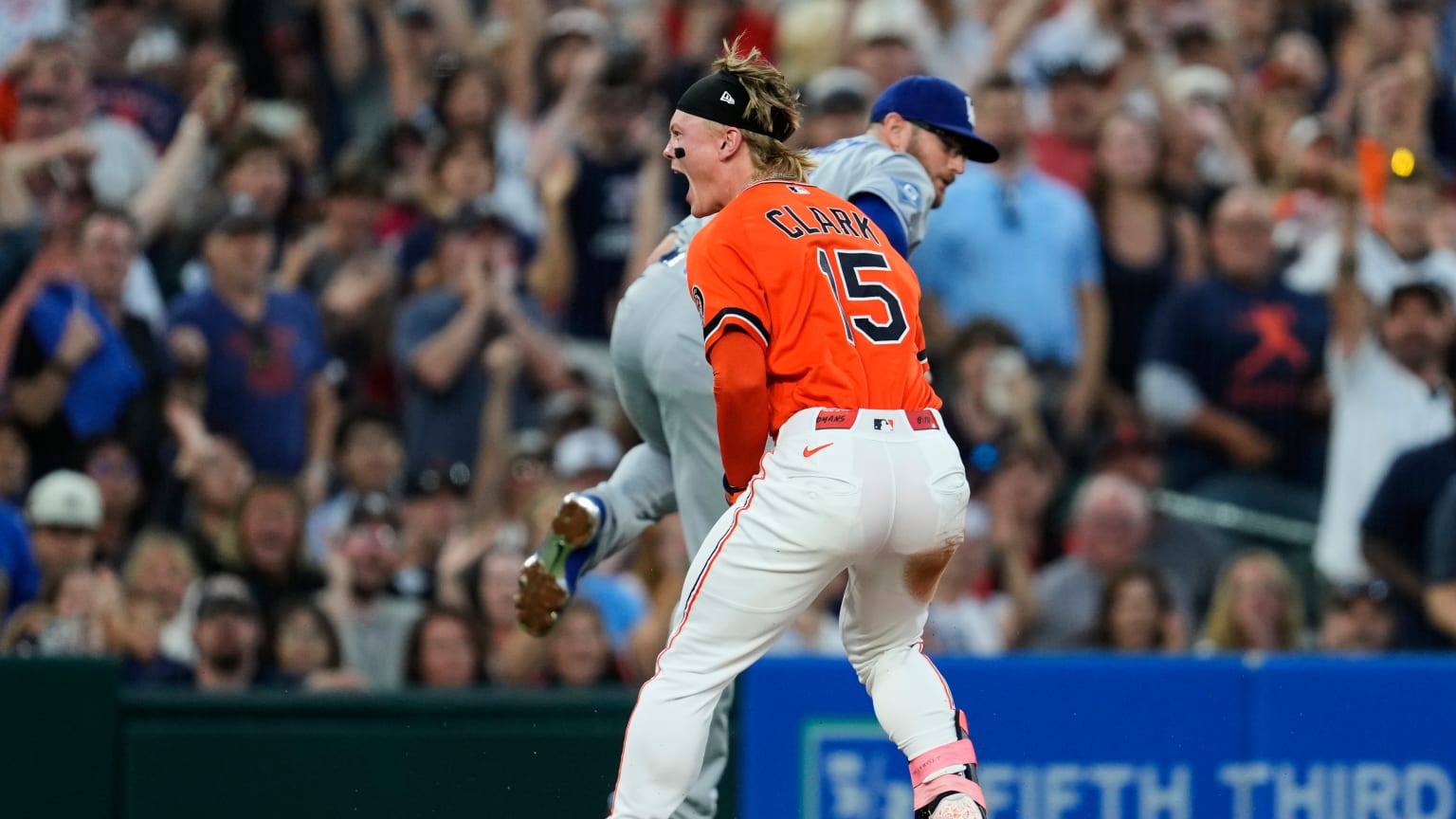
That is probably closer to the offensive profile I am watching with Clark right now. He can hit the ball hard enough to create damage without trying to turn every swing into a home run. If the barrels come later, that is when the power conversation becomes much more interesting.
Using the entire field
Clark’s opposite-field double against Blake Snell is another play that fits with what the numbers are telling us. He drove the ball the other way at 93.1 mph with a 13-degree launch angle, which is much more representative of the line-drive, gap-to-gap approach we have seen during this recent stretch. This is the Max who I saw in the minors do this often.
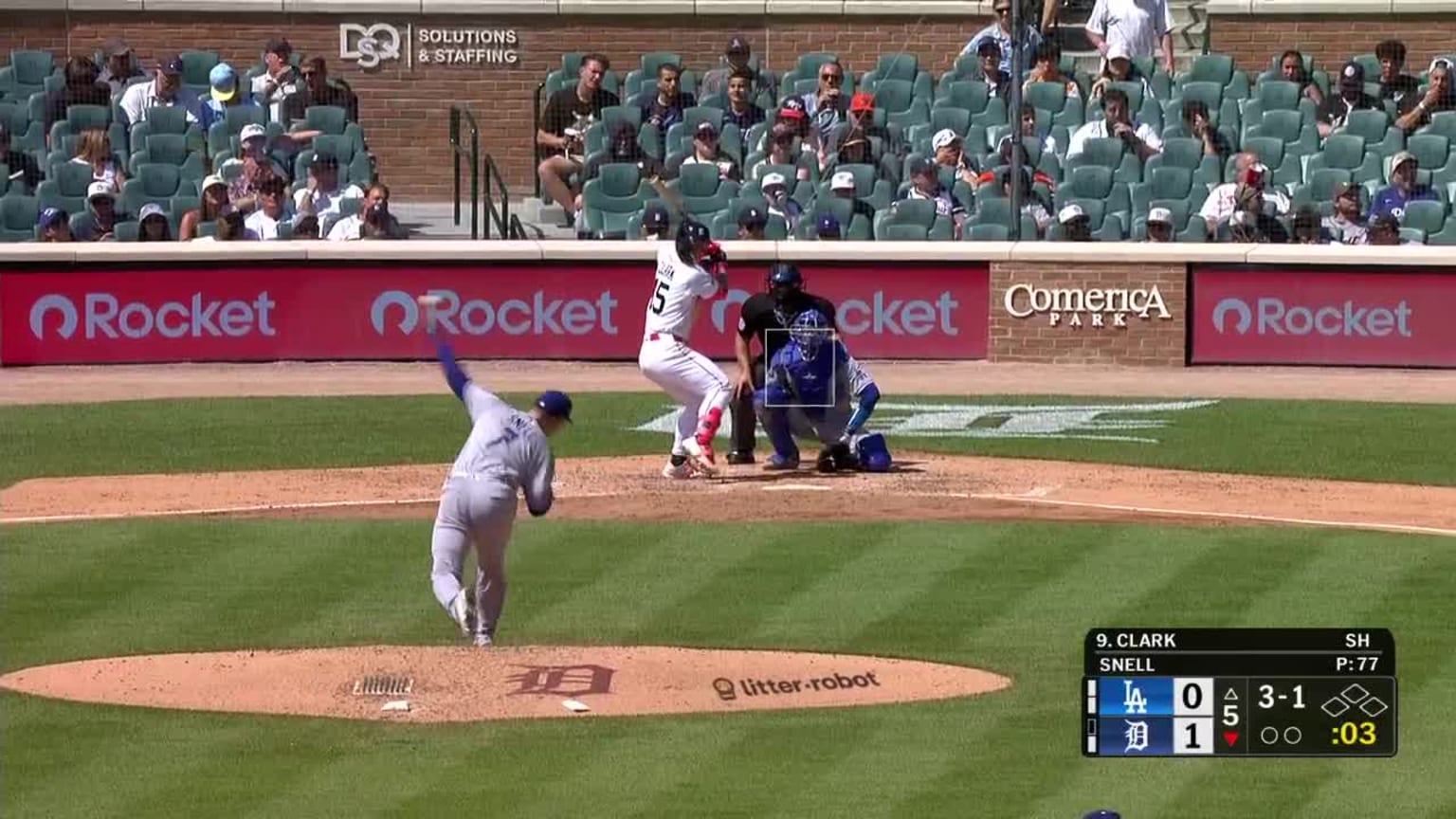
His speed gives him additional value on balls hit into the gaps, and the ability to use the opposite field makes it more difficult for pitchers to simply attack one part of the zone, like the triple off Skubal.
We saw another example of the improved contact quality on Sept. 2, when Clark doubled on a ball hit at 101.1 mph with a 15-degree launch angle. That combination of exit velocity and launch angle is exactly the type of contact you want to see becoming more frequent.
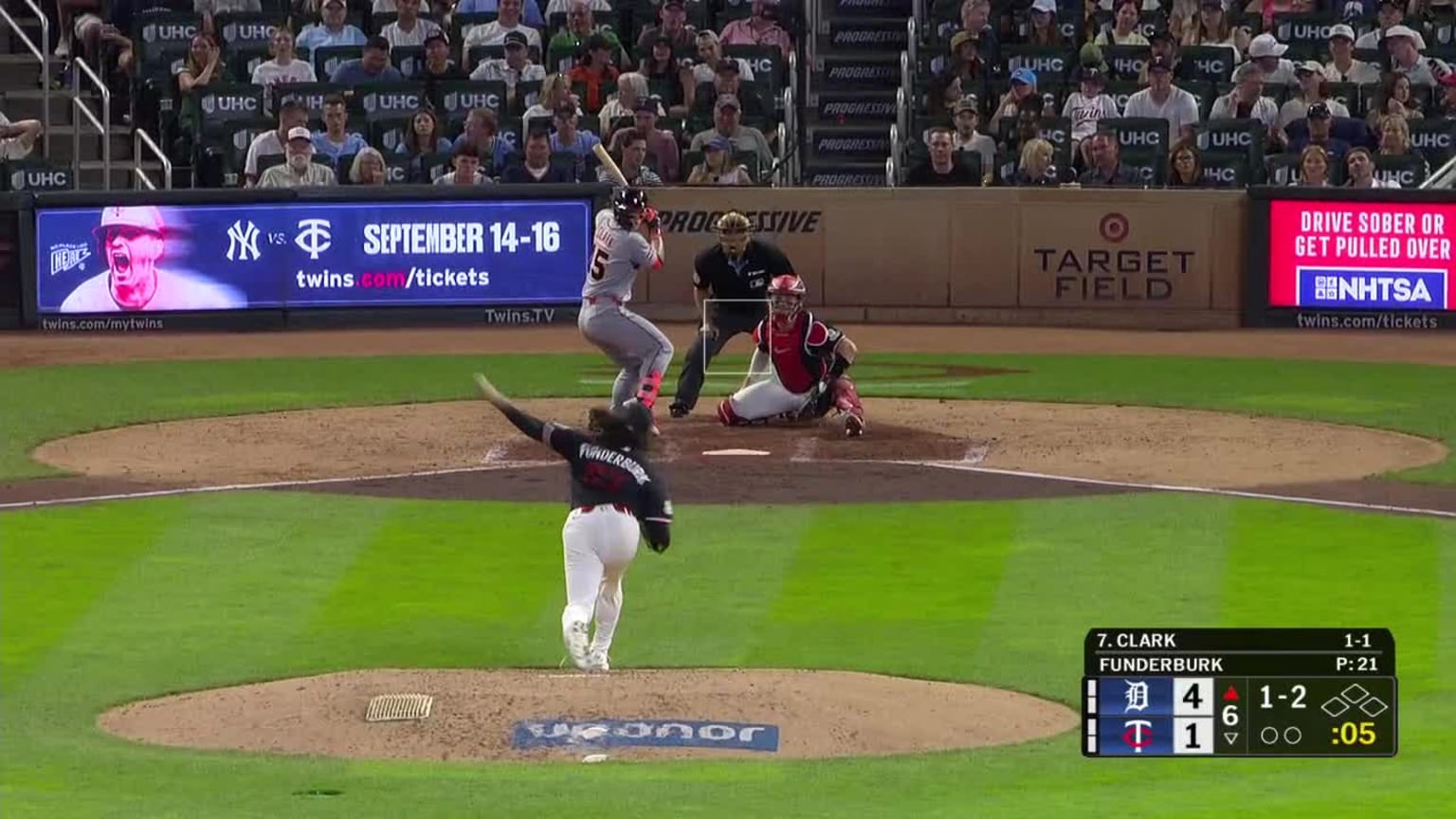
When you put those plays next to the increase in his line-drive rate and squared-up percentage, the recent improvement makes more sense. Clark is not just getting more hits. He is making better contact more consistently.
The league is already adjusting back
There are still areas where major-league pitchers have had success against him, and changeups are probably the clearest example. Clark entered Friday without a hit in 13 plate appearances ending on a changeup, and the pitch had produced a minus-3 run value against him.
The matchup with Skubal is a good example because it shows both sides of where Clark is right now. He was capable of hammering one pitch for a 105 mph triple, but Skubal was also able to disrupt him with the changeup.
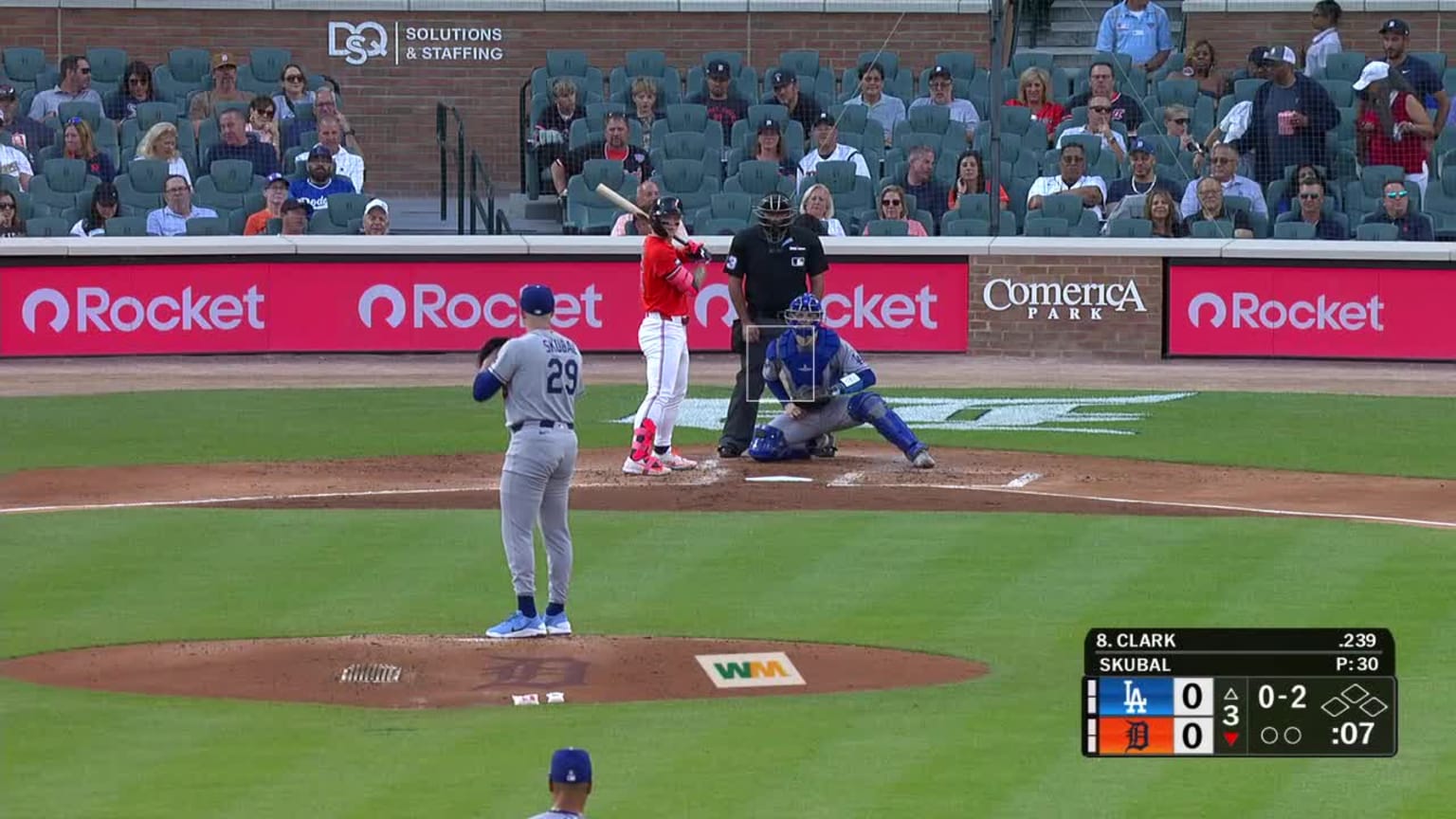
That is the part of the development process that becomes interesting now. Clark has shown he can handle velocity when pitchers challenge him, so teams are going to keep looking for ways to change speeds, get him out in front and force him to recognize pitches earlier.
Clark has seen 40 changeups. In 13 plate appearances ending on one, he is 0-for-13, with a .000 slugging percentage, 26.1% whiff rate and 30.8% strikeout rate. Statcast has changeups at minus-3 runs for him. Splitters have also given him trouble, although we're talking about only 13 pitches so small sample size.
I do not think that is anything unusual for a hitter this young. It is simply the next adjustment to watch. Once major-league pitchers find something that works, they are going to keep going back to it until Clark proves he can make them stop.
The defense gives him another way to contribute
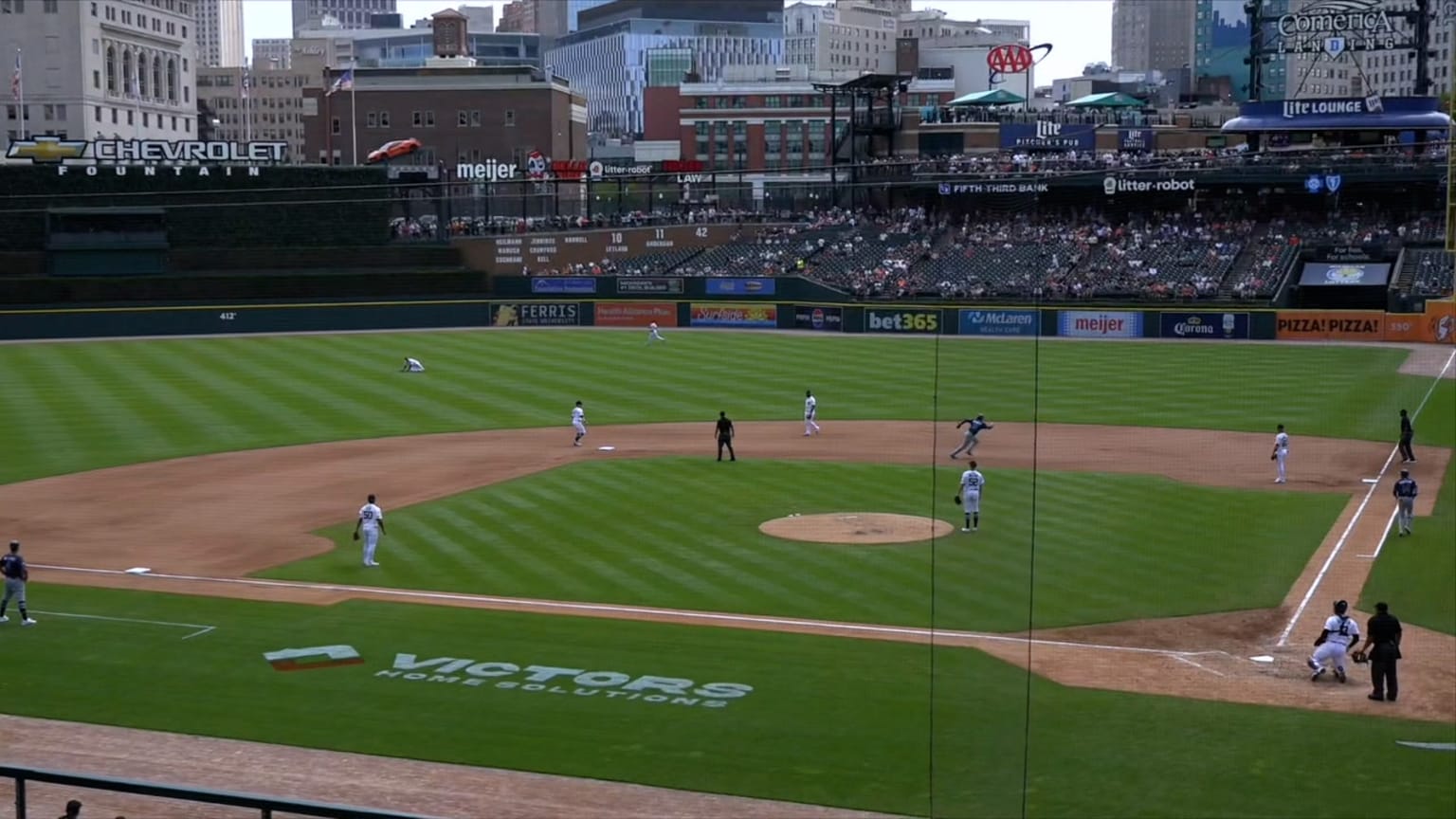
The offensive development gets most of the attention, but Clark has already provided value in center field as well. Statcast had him at plus-4 Outs Above Average entering Friday, which gives Detroit another reason to keep him in the lineup even when the offense goes through stretches of adjustment.
Conclusion
The last few weeks do not necessarily tell us that Max Clark has suddenly become a different hitter. They tell us that some of the things that made him one of Detroit’s best prospects are beginning to translate more consistently against major-league pitching.
The contact has gotten better. He is producing more line drives, his hard-hit rate has improved, he is striking out less and he is squaring the baseball up more often without a dramatic increase in bat speed or a major change in his attack angle. That is probably the most encouraging part of the entire stretch because it suggests the improvement is coming from timing, pitch recognition and a better feel for major-league pitching rather than Clark simply selling out for more damage.
There are still obvious areas for pitchers to attack. Changeups have given him trouble, and the barrel rate remains low enough that I would stop well short of calling this a power breakout. Those are legitimate parts of his development and probably the areas worth watching as teams build a more detailed scouting report on him.
But Clark does not need to become a completely different type of hitter for this to work. The speed is already there. The defense in center field has already provided value. If he continues putting himself in good counts, using the entire field and turning more of this improved contact into extra-base damage, the offensive profile starts to make a lot more sense.
For me, that is the takeaway from the last few weeks. We are not watching the finished version of Max Clark yet. We are starting to see how his skill set can work against major-league pitching, and now the interesting part is seeing what happens when the league makes its next adjustment.
Comments

Powered by RoundtableAn AI/DeFi-powered Enterprise Media Operating System. Learn more at Roundtable.io.© Roundtable 2026. By using this site you agree to the Terms of Use and Privacy Policy